Monday, September 19, 2005

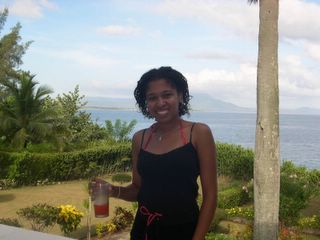
The mountains of the Dominican Republic. Posted by Picasa
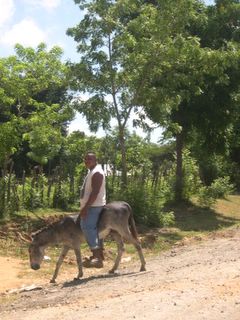
This is Gordo (nickname in Spanish meaning "fat guy") riding a donkey. Everytime I saw Gordo, he was riding that donkey. It was hilarious, but it was so his mode of transportation. Posted by Picasa
Ikuko's humble abode. It was very basic. In the DR, the electricity went off in the middle of the day and at night. There was no warning when it would shut off, but you knew it would. There were some nights where we were lucky if the electricity stayed on past 10pm.  Posted by Picasa
One Crisp Morning near Colegio Loyola, the local high school in Dajabon. Most kids get to school by walking or hitching a ride on the back of trucks (oftentimes Ikuko's truck), etc. I just thought that this shot was great in showing the kids on their way to school.  Posted by Picasa
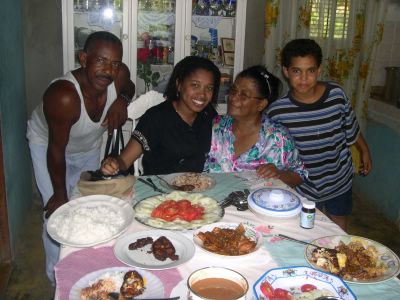
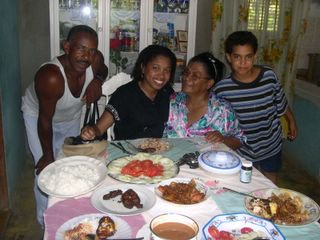
(from left) Altagracias, her granddaughter, Ruben and Flores. Flores did my hair while I was in Clavellina and then invited me to lunch with her family. I had the Dominican dish, "los crillo" (I bet I'm butchering the spelling and the name). It was muy bueno! Flores' family is what a typical Dominican family looks like, mixed white and black. That's why Dominicans are so many different shades, much like African Americans. Posted by Picasa
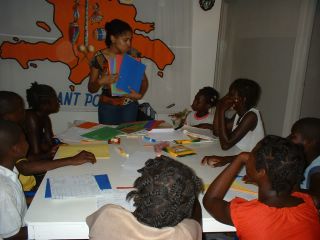
Teaching the Haitian migrant children at the center. Posted by Picasa
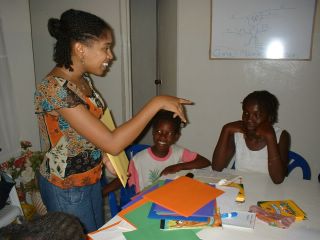
The kids learned about colors and body parts. Posted by Picasa
While I was in Dajabon, Ikuko asked me to teach English to some of the Haitian kids that came to this center that she works with. It was such a great a experience. We didn't speak any of the same languages (they spoke Creole and some Spanish) and I spoke Japanese and English, but they learned some things. I taught them "Head, Shoulders, Knees and Toes." They must've loved it because as we followed them back across the border they were doing the gestures that go to the song and laughing. Ikuko said that that was the most that she'd seen the kids smile. I was happy to laugh with them. Posted by Picasa
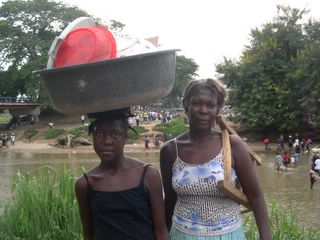
Haitians crossing the river back into Guanamen, Haiti, after a long day of working in the market in Dajabon, DR. If it threatened to rain, then they had to leave early or the river would be too high to cross. The soldiers that monitored their return often said mean things to them.  Posted by Picasa
Little Barbara! She is only 6 years old and she is SO mature. She is Ikuko's neighbor in Clavellina. She would come over when Ikuko was home and help her around the house or just to talk to her. I hope my daughter is just like her! She has a sister, Jilda, and brother, Amaori. Posted by Picasa
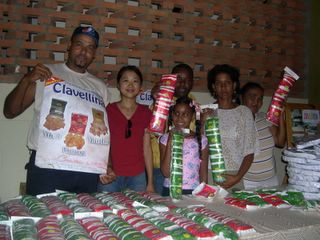
La feria: Some of the factory workers advertising their product, Yuca and Platanos chips, that they make in the small town of Clavellina. Posted by Picasa
The Taiwanese expert and Dominican locals there checking out the shrimp in the pond. This is one of the projects that Ikuko coordinates that she hopes to be another way for the people of Clavellina to sustain themselves. They raise shrimp and sell them in town. It's month two...we'll see. Posted by Picasa
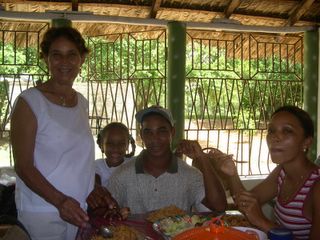
Manolo (mi tio), me, ChiCha (mi tia) and Juandi. I fell in love with this family! They were the best. As soon as she met me, she gave me the greatest hug and fed Ikuko and I. She thought that I was Dominican (as everyone I met thought) and called me a "Dominicana Americana." Before we ate this meal, she told us that she made the food with love "con amor." I cried after leaving her house the first time I met her. I never knew someone with such great energy and love. She adopted Juandi. Apparently he came to visit her once from Mao and cried to come back, so she she let him stay and enrolled him in school there. I'm coming back to visit them, mark my words. Posted by Picasa
The year of the Dominican Republic's independence.  Posted by Picasa
Your average little bodega (I'm calling it that because they remind me of the bodegas or little mini stores in NYC). Posted by Picasa
There were mountains all over Dajabon. It reminded me so much of Japan.  Posted by Picasa
Ikuko, Morfi and I in the mountains after the Boshi-Techo workshops. The workshop's aim was to introduce the Boshi-Techo program created by Japan to Dominican mothers. The program was created to decrease infant mortality rates (which increased in Japan following WWII). Infant mortality is a huge problem in the province of Dajabon. The simple solution that Ikuko and the ministry of health (Morfi presents in the workshop) seek is to introduce these "History of my health" books to the mothers so that they can keep the records of their children's health. Something as simple as that can help doctors and parents in keeping up with the health of the children. Posted by Picasa
Boy on horseback near one of the clinics in the mountains. The journalist that came to document one of the Boshi-Techo workshops took it really quick for me. He has a great eye. Posted by Picasa
Vaca Crossing: This happened to us so many times: boy on horseback herds cows down a dirt/main road, we wait in the car until they pass. I swear, that really happened everyday that I was there. Posted by Picasa
Memorial to the Japanese that came to Dajabon after/during (? ) WWII. Ikuko says that the dictator of the DR placed them there in Dajabon close to the border of Haiti because he believed that if the Haitians (?) tried to attack, then the Japanese government would come and rescue them, making them a buffer between the Dominicans and the Haitians. I met one Japanese descendent in Dajabon, Yamanaka-san, who was an owner of a shop. Posted by Picasa
This guy was taking the bus with us from Dajabon to Santiago. I thought that he looked different from the rest of us "Dominicans." Turns out he was a United Nations representative from Guinea monitoring the conditions in Dajabon and Haiti. He only spoke French and Ikuko spoke some French. His friend was from Haiti and could manage a bit of Spanish to speak to Ikuko. It's a small world. He showed us pictures of him in his U.N. uniform. So cool. Posted by Picasa
The best meal I had during my trip. I had sea bass fillet and Ikuko had conch. Well...the best meal was at ChiCha and Manolo's home. Posted by Picasa
Drinking juice in the morning. This was the view from our bungalow in Sosua. It was lovely :) Posted by Picasa
Beach Girls just wanna have fun. Ikuko and I on the beach in the early morning hours in Sosua. Posted by Picasa
This can't be the last time I see the shores of the Dominican Republic. Posted by Picasa